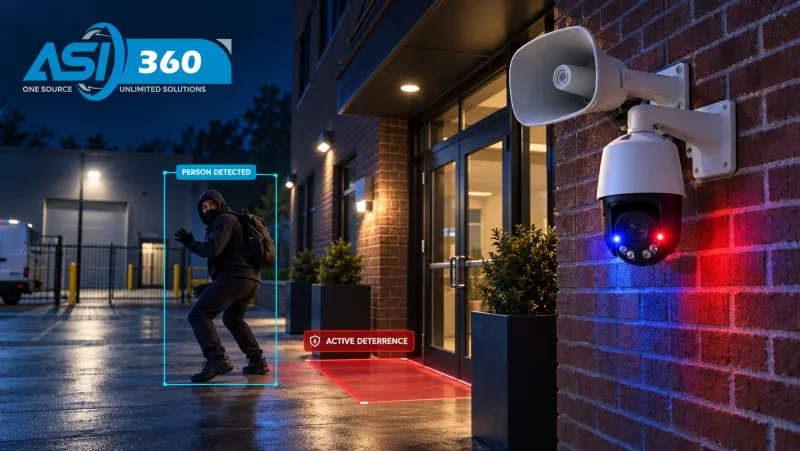
Give a person approaching your property a clear warning before they reach the door. Our Prevention Protection Plan connects detection, light and voice to a response designed for your site.
Prevent. Protect. Preserve. Start at the boundary. Plan the response.
DETECT → WARN → RESPOND Illustrative system view
ONE CONNECTED RESPONSE
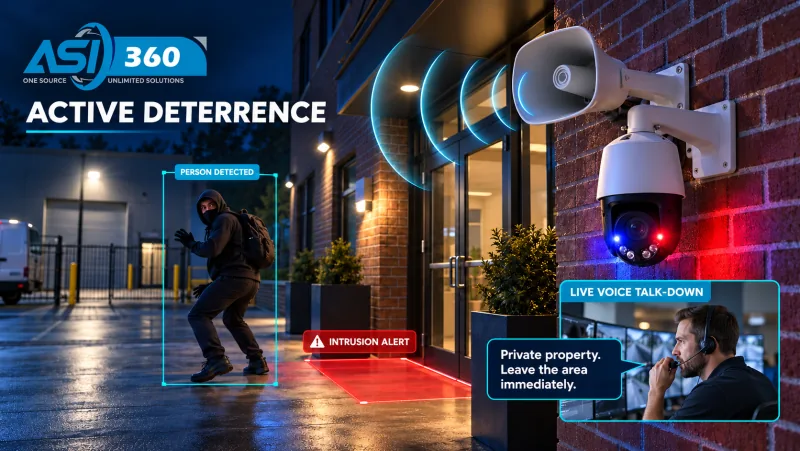
Smart detection + Red & blue lights + Audible warning + Live talk-down options
THE FIRST SECONDS MATTER
Give the warning before the door.
An alarm notification starts a process. A configured perimeter warning can act on site while people review the event and decide what happens next.
PREVENTION PROTECTION PLAN
Act at the boundary.
Detect a person in the armed perimeter zone.
Activate supported lights and an audible warning.
Notify an authorized responder; add live talk-down where configured.
Review evidence and follow the escalation plan when needed.
The local warning can operate before a dispatch request is made.
CONVENTIONAL MONITORED ALARM
Work through the call chain.
A sensor sends an alarm to the monitoring center.
Contact calls or other verification may be required.
The alarm company requests emergency response when criteria are met.
The agency assesses priority and available responders.
Procedures vary. Police do not universally call the owner before dispatch.
ILLUSTRATIVE TIMING SCENARIO
Seconds at the perimeter. Minutes in a response chain.
Explore why the point of intervention matters. These values are hypothetical, not measured service performance.
3 secExample local warning
30 minExample outside response
No guaranteed deterrence, operator or police response time. Commissioning tests measure the configured system’s actual detection-to-warning delay.
Why show contact calls? The SIAC model alarm ordinance describes two-call confirmation before a dispatch request. Oakland’s alarm guidance discusses false alarms, contact responsibilities and response when possible. Local rules and service procedures vary.
Invest in prevention before you pay for damage.
Avoiding an incident can spare stolen property, broken doors, repairs and business downtime. Build protection around the point where an approach becomes an intrusion.
Watch our 16-second PPSS-X360 business demonstration: a staged approach, visible warnings, a spoken message and retreat.
16 SECONDS · PLAY WITH SOUND FOR THE VOICE WARNINGSimulated event · Concept equipment installationRead the video transcript
A person approaches the monitored entrance. A warning tone sounds. A voice says: “Attention. This is a restricted area. Please leave the property.” The person pivots and retreats. This is an illustrative scenario.
FROM AWARENESS TO ACTION
A warning that changes the moment.
Recording tells you what happened. Active deterrence adds a response while an event is unfolding—with rules and escalation designed for your site.
01 / DETECT
Recognize the event.
Configure compatible cameras for person or vehicle detection, entry zones and schedules that match your property.
02 / WARN
Make protection visible.
Trigger red and blue warning lights and an audible alert to make the security presence unmistakable.
03 / RESPOND
Put a voice on site.
With a supported monitoring service, a live operator can review the event and speak through a connected loudspeaker.
Illustrative response scenario
HUMAN PRESENCE. REMOTE REACH.
A camera sees. A voice intervenes.
A direct message can make it clear that an event is being observed and a response is underway.
“Private property. Leave the area immediately.”
01
Automatic audible warningA siren or configured recording responds to a detection rule.
02
Live voice talk-downA remote operator speaks to the person on site through the loudspeaker.
Live monitoring, operating hours and escalation procedures are agreed separately. Features depend on compatible equipment and service configuration.
PROTECTION THAT FITS THE PLACE
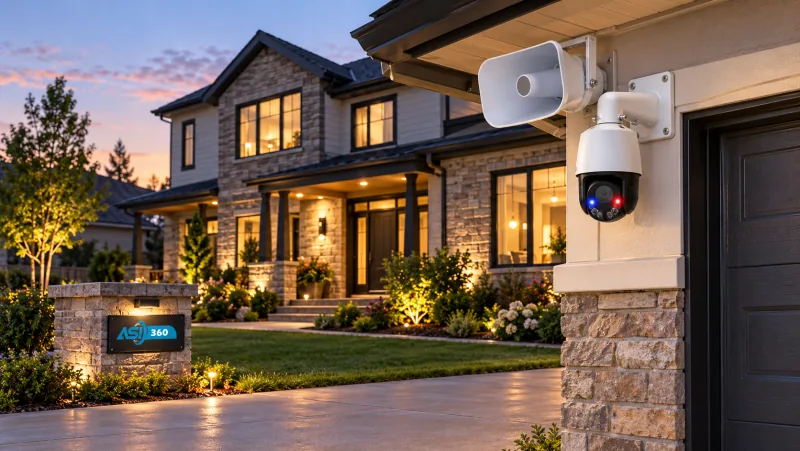
Your property. Your response plan.
Start with entrances, blind spots and the areas that need attention. We’ll help map a practical approach to coverage and intervention.
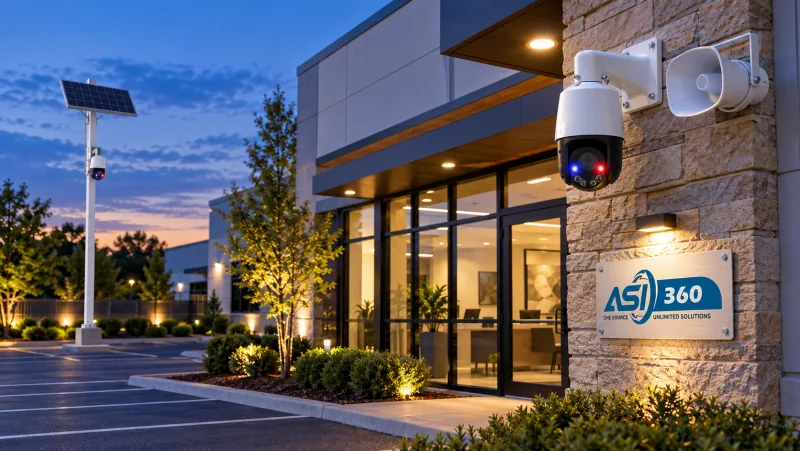
BUSINESSES & COMMERCIAL SITES
Protect the hours you’re away.
Entrances, service doors, parking areas and restricted zones. Align detection and warning schedules with how your business operates.
Packages are configured and quoted after assessment. Equipment models, mounting, cabling, installation, connectivity subscriptions and monitoring are scoped in the proposal. Live operator talk-down is a separate service option.
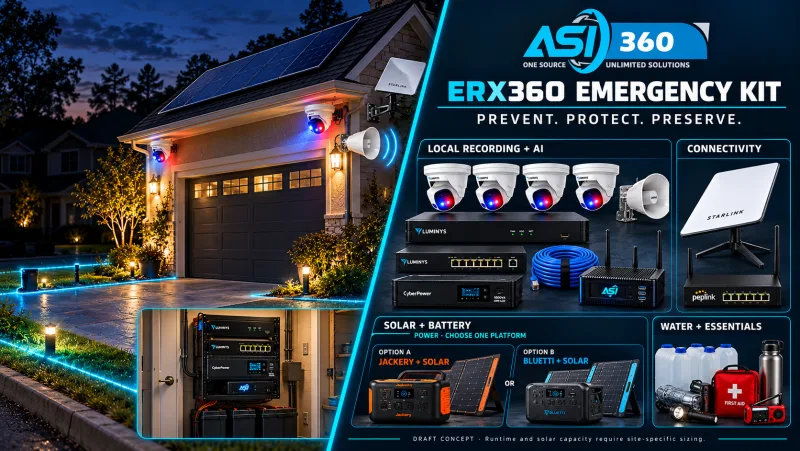
ERX360 / EXTENDED OFF-GRID READINESS
When the grid goes down, have a tested plan.
For extended outages and “doomsday” preparedness, plan the essentials together: security, power, communications, water and the people responsible for each.
Illustrative package concept. Brands and equipment are examples; final models and capacities are selected after assessment.
POWER
Know the load.
Measure the cameras, recorder, network, speaker and satellite terminal. Choose a battery reserve and solar capacity for the intended duration and seasonal conditions.
CONNECTION
Keep a path open.
Plan satellite or cellular backup where suitable. Test failover and recovery, and distinguish local recording from services that require internet.
ESSENTIALS
Prepare beyond cameras.
Include water and essential-supply inventory, communications contacts, maintenance responsibilities and an outage rehearsal in the readiness assessment.
Extended autonomy is an engineered option.
Runtime depends on measured power draw, usable battery capacity, weather, shading and replenishment. A portable battery alone is not a promise of weeks or indefinite operation.
New installation or existing cameras—we begin with the property and verify what can work together.
01
Walk the perimeter
Identify priority areas, lighting conditions and approaches.
02
Match the equipment
Review camera compatibility, speaker reach, mounting and connectivity.
03
Define the response
Agree detection rules, warnings, monitoring options and escalation.
BEFORE YOU GET STARTED
A few clear answers.
How is this different from a regular camera?
A regular camera records a view. An active deterrence setup adds configured actions such as warning lights and audible alerts when an event is detected. Optional live monitoring adds operator review and voice intervention.
Can I use my existing cameras?
Possibly. We’ll review models, recording equipment, audio connections and integration support before recommending what to retain or replace.
Is live talk-down included with every camera?
No. It requires compatible audio equipment, connectivity and a monitoring or operator arrangement. We’ll distinguish automatic alerts from live intervention in your proposal.
Will animals or passing traffic trigger alerts?
Compatible analytics can help distinguish people and vehicles. Careful zones, sensitivity and schedules help reduce unwanted alerts, but results depend on the equipment and site conditions.
What happens during an internet or power outage?
That depends on the system. During the assessment, we can discuss local recording, backup power and alternative connectivity. Remote monitoring requires a working connection.
LET’S PLAN YOUR FIRST LINE OF PROTECTION
Build your Prevention Protection Plan.
Tell us what you want to protect. Start a conversation about camera coverage, audible warnings and the right level of response.